
Japanese Futon for Hot Sleepers in Singapore

Living in Singapore means dealing with warm temperatures and high humidity throughout the year. For hot sleepers, choosing the right bedding can make a noticeable difference in nighttime comfort. While thick mattresses may feel cozy, some sleepers prefer a simpler and more breathable sleep setup. This is where a Japanese Futon can be an interesting option.
Known for its practical, minimalist design, a Japanese Futon offers a different sleeping experience from a conventional mattress. But is it suitable for hot sleepers in Singapore? Here are the key things to consider before making the switch.
Why Can a Japanese Futon Be Good for Hot Sleepers?
Hot sleepers often look for bedding that does not feel overly thick or heat-trapping. A Japanese Futon may offer a more comfortable alternative because of its relatively slim profile and simpler construction.
Since your body is not surrounded by a deep mattress, the sleeping surface can feel less bulky. Depending on the materials used, some futons are also designed with breathable layers that help manage heat and moisture.
For Singapore’s tropical climate, choosing a Japanese Futon made with breathable materials can help create a fresher and more comfortable sleep environment.

1. Look for Breathable Materials
Material is one of the most important factors when choosing a Japanese Futon for Singapore.
Natural fibres such as cotton are commonly associated with Japanese-style bedding because they provide a soft feel while allowing air to circulate. Some modern futons may also combine different layers or materials to improve cushioning, support, and breathability.
If you tend to sleep hot, avoid choosing based on softness alone. Consider whether the materials allow heat and moisture to escape rather than building up around your body throughout the night.
2. Thickness Matters in Singapore’s Climate
A very thick mattress is not necessarily more comfortable, especially for someone who tends to feel warm at night.
One characteristic of a Japanese Futon is its relatively slim construction. This creates a different sleeping sensation from a deep mattress and can make the bed feel less bulky.
However, thinner does not automatically mean better. The right thickness should provide enough cushioning for your preferred sleeping position while still giving you the firmer, more compact feel typically associated with futon-style bedding.
Finding the right balance between cushioning and breathability is key.
3. A Practical Choice for Air-Con and Fan Users
Many Singapore households use air conditioning or a fan at night. A Japanese Futon can work well with either setup, depending on its materials and the bedding paired with it.
For air-conditioned rooms, you can adjust your duvet or blanket according to the temperature instead of relying on an overly plush mattress for warmth. For rooms with a fan, breathable sheets and a lightweight futon can help create a comfortable sleeping environment.
Choosing moisture-friendly bedding is particularly useful in Singapore, where humidity can remain high even at night.
4. Easy to Fold and Store in Small Homes
Comfort is not the only reason to consider a Japanese Futon. Space efficiency is another major advantage, particularly for compact living.
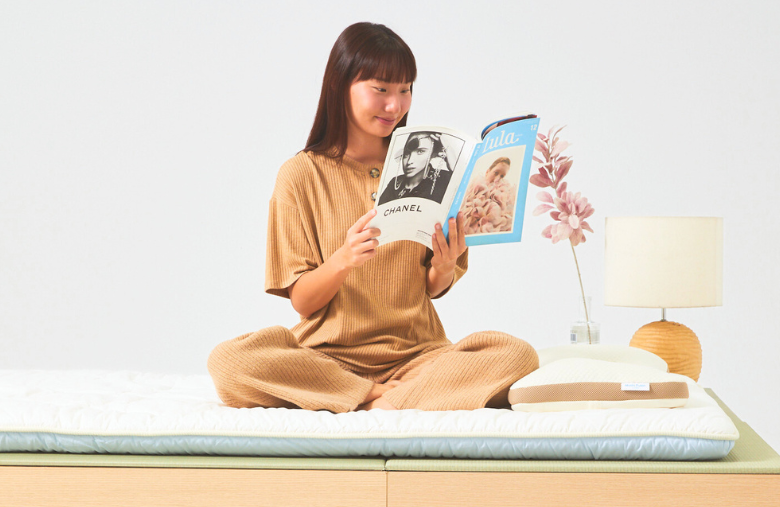
Unlike a conventional bed that permanently occupies a large part of the room, a foldable futon can be stored when it is not in use. This allows the same space to serve different purposes throughout the day.
For example, a bedroom can become a workspace, exercise area, or living space once the bedding is put away. This makes a Japanese Futon particularly practical for smaller apartments, guest rooms, and multifunctional spaces in Singapore.
5. Humidity and Futon Care Are Important
Singapore’s humidity is one of the most important factors to consider before switching to floor sleeping.
When a Japanese Futon is placed directly on the floor, moisture can become trapped underneath, especially if the room has limited airflow. Over time, excess moisture may lead to unwanted odours or mould.
To help prevent this, regularly lift and air out your futon rather than leaving it in the same position continuously. Allow both the futon and the floor underneath to dry properly.
Using a breathable mat or suitable bed base beneath the futon may also help improve airflow, depending on your sleeping setup.
Japanese Futon vs Regular Mattress for Hot Sleepers
A conventional mattress and a Japanese Futon offer very different sleeping experiences.
A regular mattress is generally thicker and may provide deeper cushioning, while a futon tends to offer a firmer, more compact sleeping surface. A futon can also be easier to move, fold, and store.
For hot sleepers, however, material and construction matter more than the name of the product. Neither option is automatically cooler. A breathable futon may feel comfortable in Singapore, while a poorly ventilated one placed directly on a humid floor may trap moisture underneath.
The best option depends on your sleeping preference, room ventilation, air-conditioning habits, and how much maintenance you are willing to do.
Is a Japanese Futon Suitable for Singapore?
Yes, a Japanese Futon can be a practical option for Singapore, particularly for hot sleepers who prefer a relatively slim sleeping surface and people who want to maximise space at home.
However, Singapore’s humid climate means ventilation should be a priority. Look for breathable materials, use suitable sheets, air the futon regularly, and avoid allowing moisture to remain trapped between the futon and the floor.
For people living in smaller homes, the ability to fold and store a Japanese Futon also offers the added benefit of creating more usable space during the day.
A Japanese Futon offers a combination of simplicity, flexibility, and space-saving convenience that can suit modern Singapore living. For hot sleepers, choosing breathable materials and an appropriate thickness can help create a lighter, less bulky sleeping setup.
At the same time, proper care is essential. Singapore’s warm and humid conditions mean a Japanese Futon should be aired regularly and kept as dry as possible to maintain freshness.
Ultimately, the best Japanese Futon is one that matches your preferred sleeping position, comfort level, room environment, and lifestyle. With the right materials and proper care, it can be a comfortable and practical bedding choice for hot sleepers in Singapore.


Comments